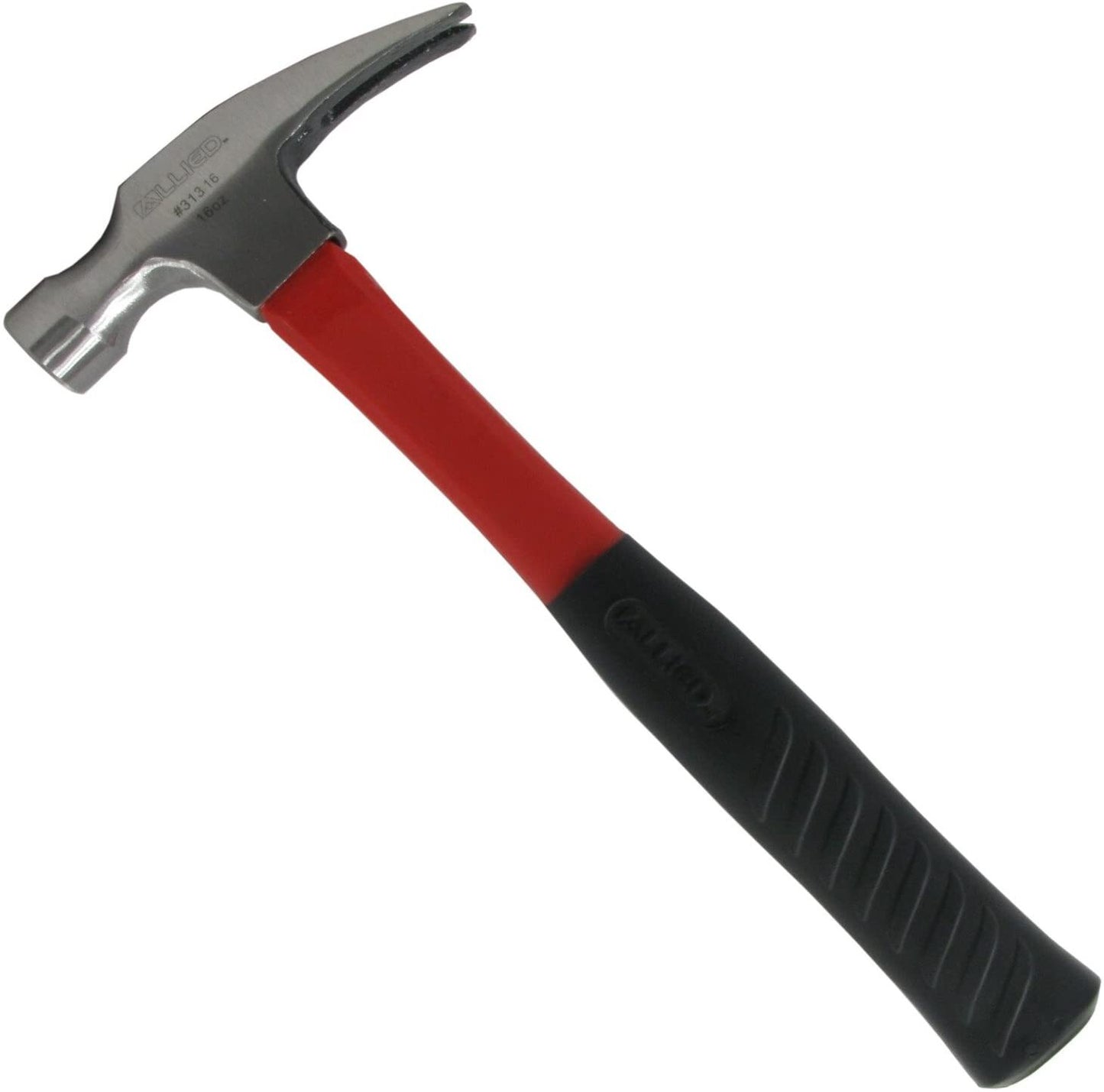
Fiberglass Handle Claw Hammer Rip Framing Contractor Construction
Fiberglass Handle Claw Hammer Rip Framing Contractor Construction
Couldn't load pickup availability
Fiberglass Handle Claw Hammer — Professional Contractor Tool
Steel Head | Rip Claw Design | Shock-Absorbing Handle | Rubber Grip | Professional Grade
Drive Nails, Pull Fasteners, and Handle Light Demolition With Reduced Fatigue
Gutter installation involves more than running the machine — fascia repairs, bracket mounting, spike removal, and trim adjustments all require a reliable striking tool. The fiberglass handle claw hammer — also called a rip hammer, framing hammer, contractor hammer, construction hammer, and carpenter's hammer — combines the striking power of a steel head with the shock absorption of a fiberglass shaft. The result is a tool that delivers full striking force while significantly reducing the vibration transmitted to the hand and arm. For contractors swinging a hammer hundreds of times per day, this fatigue reduction translates directly to sustained productivity and reduced strain injuries.
Steel Head | Fiberglass Shaft | Rip Claw | Rubber Grip | Shock Absorption | Professional Grade
Key Benefits at a Glance
Absorbs strike vibration — reduces hand and arm fatigue during extended use.
Hardened steel delivers full striking power for driving and demolition.
Straighter claw provides better leverage for nail pulling and prying.
Textured surface provides secure hold in wet or dusty conditions.
Why Handle Material Matters for Professional Contractors
The hammer is the most frequently used hand tool on most construction sites. Every nail driven, every fastener pulled, every adjustment made transmits impact energy through the handle to the user's hand and arm. Over a full workday — and across weeks and months of continuous use — this cumulative vibration contributes to fatigue, discomfort, and repetitive strain conditions. The fiberglass handle claw hammer — also referred to as a shock-absorbing hammer, vibration-reducing hammer, contractor's framing hammer, professional rip hammer, and ergonomic construction hammer — addresses this problem by using fiberglass shaft construction that flexes microscopically on impact, absorbing and dissipating vibration energy before it reaches the grip.
The rip claw design distinguishes this hammer from curved claw models. The straighter claw geometry provides better leverage for pulling nails and greater prying capability for light demolition work. Gutter contractors frequently encounter old gutter spikes, rotted fascia nails, and embedded fasteners that require extraction before new installation can proceed. The rip claw's angle and leverage make this extraction work significantly easier than attempting the same tasks with a curved claw hammer designed primarily for finish carpentry.
The rubber grip completes the ergonomic design by providing a secure, comfortable holding surface. The textured rubber maintains grip even when wet from rain or perspiration, and the cushioned construction adds another layer of vibration damping at the primary contact point. GutterAll supplies fiberglass handle claw hammers to gutter contractors, general contractors, and construction professionals throughout the Pacific Northwest and nationally from the Damascus, Oregon location.
| Product | Key Specifications |
|---|---|
| Fiberglass Handle Claw Hammer | Steel Head | Rip Claw | Fiberglass Shaft | Rubber Grip | Shock Absorbing | Professional Grade |
Full striking power. Reduced vibration. Professional contractor performance.
Start a chat now or email sales@gutterall.com for contractor pricing.
Understanding Hammer Handle Materials — Why Fiberglass Outperforms
Traditional wood handles absorb some vibration but can crack, split, or loosen from the head over time. Steel handles transmit maximum force but also transmit maximum vibration — leading to rapid fatigue. Fiberglass occupies the optimal middle ground: strong enough to transmit full striking power, flexible enough to absorb harmful vibration, and durable enough to resist the cracking and splitting that plague wood handles. The composite fiber construction cannot rot, swell, or shrink with moisture changes, and the epoxy-bonded connection to the head resists the loosening that eventually affects wedged wood handles. For contractors who depend on their tools daily, fiberglass handles provide the best combination of performance, durability, and user comfort.
Work Applications — Where the Fiberglass Hammer Delivers Value
The fiberglass handle claw hammer addresses five primary striking and extraction applications for gutter contractors and construction professionals:
| Application | The Challenge | Why It Helps |
|---|---|---|
| Gutter Spike Removal | Old gutter spikes embedded in fascia require extraction before hidden hanger installation | Rip claw provides leverage to pull embedded spikes without damaging fascia |
| Fascia Nail Driving | Gutter brackets and hangers require secure fastening to fascia boards | Steel head drives fasteners with full force while handle absorbs shock |
| Rotted Fascia Removal | Damaged fascia sections must be removed before replacement and gutter installation | Rip claw pries rotted sections loose; head drives new fasteners |
| Bracket Adjustment | Hidden hangers and brackets occasionally need repositioning or persuasion | Controlled strikes adjust position without damaging bracket finish |
| General Construction | Framing, blocking, and structural work require reliable striking capability | Professional-grade construction handles all-day framing and demolition work |
Technical Overview — Understanding Hammer Construction
Hardened Steel Head
The head uses heat-treated steel that resists deformation and chipping under repeated impact. The striking face is machined flat or slightly convex (depending on model) for clean nail contact, and the surface is typically milled with a subtle texture pattern that grips nail heads and reduces glancing strikes. The hardening process creates a face that maintains its profile through thousands of strikes without mushrooming or developing dangerous burrs.
Rip Claw Geometry
The rip claw — also called a straight claw or framing claw — extends from the head at a relatively straight angle compared to the curved claw found on finish hammers. This geometry provides superior leverage for pulling nails and significantly better prying capability. When the claw is hooked under a nail head or board edge, the straighter angle allows more force to be applied before the claw slips. For demolition and extraction work, rip claw hammers substantially outperform curved claw designs.
Fiberglass Handle Construction
The handle uses fiberglass-reinforced composite construction — glass fibers embedded in epoxy resin. This material provides excellent strength in both tension and compression while offering natural vibration damping. Unlike wood, fiberglass cannot absorb moisture, rot, crack along the grain, or loosen from the head. The handle-to-head connection typically uses epoxy bonding and mechanical retention, creating a permanent assembly that will not work loose with use.
Rubber Overmold Grip
The grip section features a rubber or thermoplastic overmold bonded to the fiberglass shaft. This overmold serves three functions: additional vibration damping at the primary contact point, a textured surface that maintains grip in wet or dusty conditions, and cushioning that reduces hand fatigue during extended use. The overmold material is selected for durability — it resists cuts, abrasion, and chemical exposure from construction adhesives and solvents.
Head Weight Selection — Choosing the Right Hammer
16 oz — Precision Work
- Finish carpentry and trim
- Light-duty fastening
- Extended overhead work
- Detail and adjustment work
- Reduced arm fatigue
20 oz — General Purpose
- Most common contractor weight
- Balanced power and control
- All-day general construction
- Gutter bracket installation
- Fascia repair work
22-28 oz — Heavy Duty
- Framing and structural work
- Demolition tasks
- Large fastener driving
- Embedded spike extraction
- Maximum striking power
Shock-absorbing handle. Rip claw leverage. Professional contractor grade.
Start a chat for fastest response or email sales@gutterall.com
Key Features and User Benefits
| Feature | Technical Detail | User Benefit |
|---|---|---|
| Fiberglass Handle | Glass fiber composite shaft construction | Absorbs strike vibration — reduces hand and arm fatigue |
| Hardened Steel Head | Heat-treated steel resists deformation | Full striking power without face mushrooming or chipping |
| Rip Claw Design | Straight claw geometry for leverage | Superior nail pulling and prying capability |
| Rubber Grip | Textured overmold bonded to shaft | Secure hold in wet or dusty conditions |
| Permanent Assembly | Epoxy-bonded head-to-handle connection | Head cannot loosen or detach during use |
| Weather Resistant | Fiberglass cannot rot, swell, or shrink | Maintains performance in all weather conditions |
The fiberglass handle claw hammer — also known as a rip hammer, framing hammer, contractor hammer, construction hammer, carpenter's hammer, shock-absorbing hammer, vibration-reducing hammer, and ergonomic construction hammer — combines hardened steel striking power with fiberglass shock absorption for reduced user fatigue during extended work. The rip claw design provides superior leverage for nail extraction and light demolition, and the rubber overmold grip maintains secure handling in wet or dusty job-site conditions. The epoxy-bonded head-to-handle connection eliminates the loosening problems that affect wood-handled hammers, creating a permanent assembly that maintains its integrity throughout years of professional use. GutterAll supplies fiberglass handle claw hammers to gutter contractors, general contractors, and construction professionals throughout the Pacific Northwest and nationally. Contact sales@gutterall.com for contractor volume pricing. Available for in-store pickup at 19759 SE Sunnyside Rd, Damascus, OR 97089, local delivery in the Portland metro area, or shipping to all 50 states. Monday through Friday 7am to 4pm, Saturday 8am to 2pm PST.
Why Gutter Contractors Choose the Fiberglass Handle Hammer:
- Shock Absorption: Fiberglass shaft absorbs strike vibration before it reaches the hand
- Reduced Fatigue: Less vibration means longer productive work without arm strain
- Rip Claw Leverage: Straight claw geometry provides superior nail pulling power
- Prying Capability: Rip claw handles light demolition and board removal
- Steel Head Durability: Heat-treated steel resists mushrooming and chipping
- Permanent Assembly: Epoxy bond prevents head loosening over time
- Rubber Grip Security: Textured surface maintains hold in wet conditions
- Weather Resistance: Fiberglass cannot rot, swell, or crack like wood
- All-Day Comfort: Cushioned grip reduces hand fatigue
- Professional Grade: Built for daily contractor demands
- Balanced Weight: Optimal head-to-handle ratio for controlled strikes
- Spike Extraction: Rip claw pulls embedded gutter spikes efficiently
- Fascia Repair Ready: Drives and pulls fasteners for board replacement
- Versatile Use: Handles framing, demolition, and finish tasks
- Long Service Life: Fiberglass outlasts wood handles significantly
Product Specifications
| Product Name | Fiberglass Handle Claw Hammer |
| Product Type | Rip Claw Hammer / Framing Hammer |
| Head Material | Heat-Treated Hardened Steel |
| Head Finish | Polished Steel |
| Claw Type | Rip Claw (Straight/Framing Style) |
| Handle Material | Fiberglass Composite |
| Handle Color | Red |
| Grip Material | Rubber/Thermoplastic Overmold |
| Grip Color | Black with Textured Surface |
| Head-to-Handle Connection | Epoxy Bonded (Permanent Assembly) |
| Primary Use | Nail Driving, Nail Extraction, Light Demolition, Framing, General Construction |
| Shock Absorption | Fiberglass shaft absorbs and dissipates strike vibration |
| Weather Resistance | Fiberglass immune to moisture, rot, swelling, and shrinking |
| Expected Service Life | 10-20+ years with normal contractor use. Fiberglass handles significantly outlast wood handles. Steel head maintains profile through thousands of strikes. Rubber grip may show wear after extended heavy use. |
| Maintenance | Keep striking face clean. Inspect head and handle before use. No re-wedging or handle replacement required. |
| Fulfillment Options | Nationwide Shipping (all 50 states) | Local Delivery (Portland metro) | In-Store Pickup (Damascus, OR) |
Who Uses the Fiberglass Handle Claw Hammer
Gutter Installation Contractors (Primary)
- Gutter spike and ferrule removal
- Fascia board repairs and replacement
- Hanger and bracket installation
- Rotted wood removal
- Downspout strap fastening
- General job-site construction tasks
Why it matters: Gutter installation involves constant fascia work — spike removal, board repair, bracket mounting. A shock-absorbing hammer reduces fatigue during these repetitive tasks.
General Contractors (Primary)
- Framing and structural work
- Demolition and deconstruction
- Nail driving and extraction
- Form building and removal
- Blocking and backing installation
- General construction tasks
Why it matters: Contractors swing hammers hundreds of times daily. Fiberglass shock absorption extends productive work hours and reduces repetitive strain.
DIY Homeowners (Secondary)
- Home repair projects
- Deck building and repair
- Fence construction
- Furniture assembly
- Picture hanging and trim work
- General household maintenance
Why it matters: Professional-quality tools make DIY work easier and produce better results. The fiberglass handle provides contractor-grade comfort for weekend projects.
Usage Guide — Proper Hammer Technique
- Inspect before use: Check head attachment security and handle condition. Look for cracks, chips, or damage that could affect performance or safety.
- Grip at handle end: Hold the hammer at the end of the handle — not choked up near the head. This provides maximum leverage and swing control.
- Start nails carefully: Begin with light taps to set the nail. Once the nail is stable and standing on its own, increase swing force for driving.
- Strike with face center: Aim to contact the nail head with the center of the striking face. Off-center strikes bend nails and wear the face unevenly.
- Use wrist and arm together: Effective hammering uses coordinated wrist snap and arm swing. Let the hammer weight do the work rather than muscling every stroke.
- Pull nails with claw: Slide the claw V under the nail head. Rock the hammer back using the head as a fulcrum. For stubborn nails, place a block under the head for additional leverage.
- Pry with controlled force: For demolition prying, insert the claw into gaps and apply steady pressure. Avoid violent jerking that can snap the claw or lose control.
- Keep face clean: Wipe tar, caulk, and adhesive residue from the striking face. Contaminated faces slip off nail heads causing misdirected strikes.
- Store properly: Hang the hammer or store in a tool belt — avoid dropping or throwing. Impact damage can crack fiberglass handles invisibly.
- Replace when damaged: Retire hammers with cracked handles, chipped faces, or damaged claws. Damaged tools are safety hazards and perform poorly.
Full Striking Power. Shock Absorption. Professional Contractor Tool.
Start a chat for fastest response or email sales@gutterall.com.
Mon-Fri 7am-4pm | Sat 8am-2pm PST | (503) 850-6784
Frequently Asked Questions
What is the difference between a rip claw and curved claw hammer? +
Why choose fiberglass over wood or steel handles? +
What weight hammer is best for gutter work? +
What is the return policy? +
How long does shipping take? +
Can the hammer head come loose from the fiberglass handle? +
Safety Notice
HAMMER SAFETY. Wear safety glasses when hammering — nail fragments and debris can become projectiles. Inspect the hammer before each use for cracks, chips, or damage. Never use a hammer with a loose head, cracked handle, or damaged striking face. Avoid striking hardened steel surfaces (other hammer faces, hardened pins, etc.) which can cause dangerous fragmentation. Keep grip dry and clean for secure handling. Use appropriate force — wild swings cause misdirected strikes and injuries. Never use a hammer as a pry bar beyond its designed capability. Replace damaged hammers immediately.
Order the Fiberglass Handle Claw Hammer
Professional contractor tool. Hardened steel head with rip claw design. Shock-absorbing fiberglass handle. Rubber grip for secure handling. Built for daily job-site demands.
Add to Cart — Ships Fast
Nationwide shipping | Local delivery | In-store pickup available
Contractor volume pricing: sales@gutterall.com
Mon-Fri 7am-4pm | Sat 8am-2pm PST | (503) 850-6784
Fiberglass Handle Claw Hammer — At a Glance
Professional Striking Tool. Shock-Absorbing Handle. Rip Claw Leverage. Hardened Steel Head. Fiberglass Composite Shaft. Rubber Overmold Grip. Weather Resistant. Permanent Head Assembly. Built for Contractors.
GutterAll — Professional Contractor Equipment and Gutter Supplies
Damascus, OR 97089
Sat: 8am-2pm PST