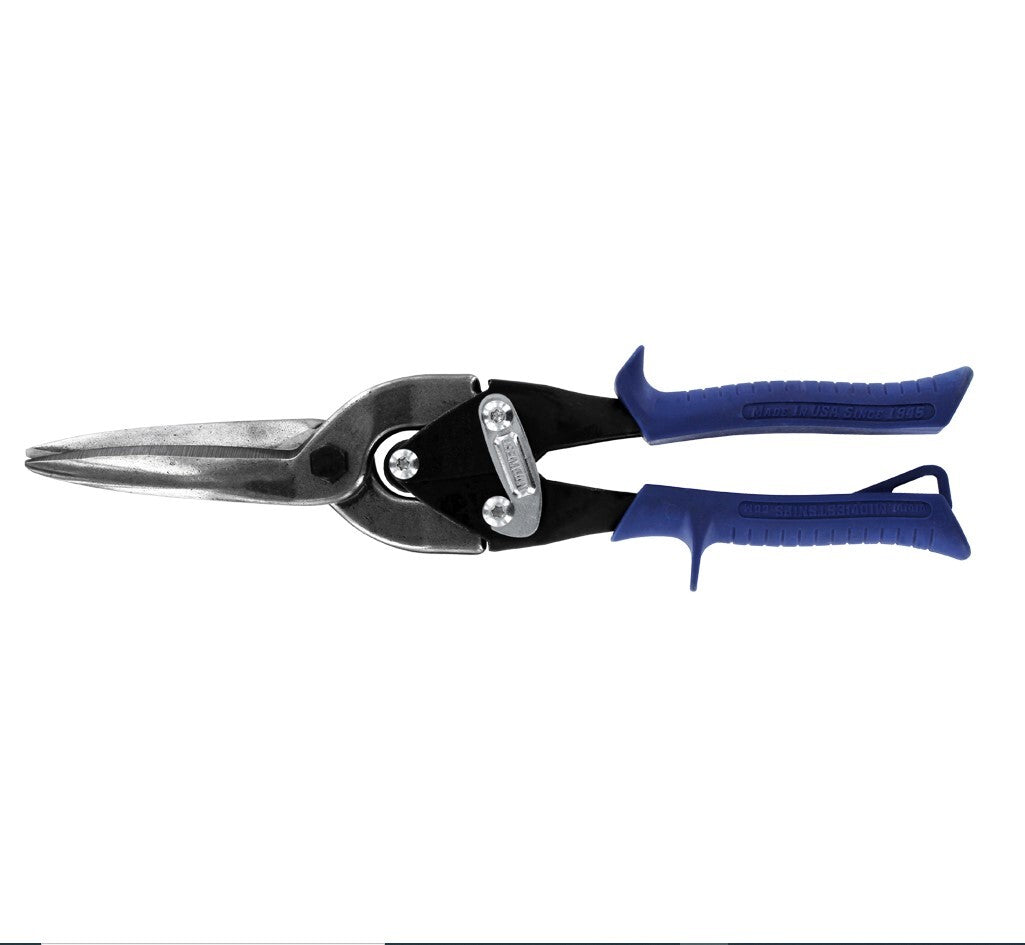
Power Cutter Long-Cut Straight Aviation Snips MWT-6716A Damascus OR
Power Cutter Long-Cut Straight Aviation Snips MWT-6716A Damascus OR
Couldn't load pickup availability
Power Cutter Long-Cut Straight Aviation Snips (MWT-6716A)
3-Inch Extended Blade | Forged Molybdenum Alloy Steel | Compound Leverage | 18-22 Gauge Capacity | Damascus Oregon
PROFESSIONAL METAL CUTTING FOR GUTTER INSTALLATION
The Power Cutter Long-Cut Straight Aviation Snips (MWT-6716A) deliver the cutting speed and precision that gutter installation contractors need for clean cuts in aluminum gutters, galvanized steel, and sheet metal flashing. These professional-grade snips feature an extended 3-inch cutting blade that allows longer strokes with fewer rebites, dramatically increasing cutting speed on gutter runs and downspout fabrication. The forged molybdenum alloy steel construction with induction-hardened cutting edges maintains sharpness through thousands of cuts in abrasive galvanized metal. The compound leverage action multiplies hand force, reducing grip effort by up to 40% for all-day cutting comfort. The straight-cut design creates clean, accurate cuts without curling or distorting gutter material. Serrated blade edges prevent material slippage during cuts, ensuring precision on critical measurements where accuracy determines fit and prevents leaks. Gutter installers, roofers, and HVAC contractors throughout the Pacific Northwest rely on Power Cutter aviation snips for consistent performance across entire projects. GutterAll stocks Power Cutter aviation snips at the Damascus, Oregon warehouse for contractors who demand professional-grade metal cutting tools.
3-Inch Blade | Forged Steel | Compound Leverage | Straight Cut
Key Benefits at a Glance
30-40% faster cutting speed.
3-5X longer edge life.
40% less grip effort.
No material slippage.
Why Gutter Contractors Choose Power Cutter Aviation Snips
Professional gutter installation requires clean, accurate cuts - and the Power Cutter Long-Cut Straight Aviation Snips deliver the cutting performance that demanding metal work requires. Gutter contractors cut aluminum gutter sections to length, fabricate downspout connections, trim metal flashing, and create custom end caps and miters. Each cut affects the final installation quality - ragged or inaccurate cuts create gaps that leak and joints that fit poorly. The 3-inch extended blade allows longer cutting strokes with fewer rebites, completing gutter runs faster while reducing hand fatigue. On a typical 20-foot gutter section, contractors make 60-80 fewer individual cuts compared to standard 1.5-inch blade snips. The forged molybdenum alloy steel with induction-hardened cutting edges maintains sharpness through thousands of cuts in abrasive galvanized and aluminum gutter material. The compound leverage action multiplies hand force, allowing all-day cutting comfort on heavy 18-gauge steel without the cramping that slows production. The straight-cut design creates clean cuts without curling or distorting material - critical for gutter sections that must fit together seamlessly. Serrated blade edges grip material firmly throughout each stroke, preventing the slippage that creates wavy, inaccurate cuts. The ergonomic cushion grips with reduced handle span design minimize hand strain during extended cutting sessions. GutterAll stocks Power Cutter aviation snips at the Damascus, Oregon warehouse for contractors who understand that quality cuts are the foundation of leak-free gutter installations.
Power Cutter Long-Cut Aviation Snips - Damascus, Oregon:
Power Cutter Long-Cut Straight Aviation Snips (also known as tin snips, metal shears, sheet metal snips, compound snips, aviation shears, or contractor snips) are available at GutterAll in Damascus, Oregon. Model MWT-6716A features a 3-inch extended cutting blade, forged molybdenum alloy steel construction, induction-hardened cutting edges, compound leverage action, serrated blade edges, and ergonomic cushion grips. Cuts 18-22 gauge cold rolled steel, 22 gauge stainless steel, aluminum, copper, and vinyl siding. Essential for gutter cutting, downspout fabrication, and professional metal work. GutterAll stocks Power Cutter aviation snips at the Damascus, Oregon warehouse.
| Product | Model | Cut Type | Key Features |
| Long-Cut Straight Aviation Snips | MWT-6716A | Straight | 3" Blade, Forged Steel, Compound Leverage, Cushion Grip |
Location: GutterAll - 19759 SE Sunnyside Rd, Damascus, Oregon 97089 - Mon-Fri 7am-4pm, Sat 8am-2pm PST
Phone: (503) 850-6784
Email: sales@gutterall.com
Contractor Pricing: Volume discounts available on Power Cutter aviation snips
Gutter Installation Applications:
The Power Cutter Long-Cut Aviation Snips excel in professional gutter cutting applications:
| Application | How the Snips Help |
|---|---|
| Gutter Section Cutting | 3-inch blade cuts aluminum and galvanized gutter sections to length with fewer strokes; straight-cut design prevents curling; serrated edges ensure accurate cuts |
| Downspout Fabrication | Clean cuts for downspout connections and outlet holes; compound leverage handles heavier gauge downspout material without hand fatigue |
| End Cap Creation | Precision straight cuts for custom end cap fabrication; serrated edges prevent slippage on thin aluminum; forged steel handles repeated cuts |
| Flashing and Drip Edge | Long blade reduces rebites on extended flashing runs; induction-hardened edges maintain sharpness on galvanized steel flashing |
| Gutter Guard Trimming | Accurate cuts for micro-mesh and aluminum gutter guard sections; clean edges for professional appearance |
| Miter Cuts and Joints | Precision on critical angle cuts where accuracy determines fit and leak prevention; serrated edges grip material through entire stroke |
Contractor Insight: The 3-inch extended blade is particularly valuable for long gutter runs - contractors report 30-40% faster cutting with significantly less hand fatigue compared to standard 1.5-inch blade snips.
Key Features of the Power Cutter Long-Cut Aviation Snips:
Features that make these snips the contractor choice for professional gutter work:
| Feature | Description | Contractor Benefit |
|---|---|---|
| 3-Inch Extended Blade | Long-cut design | 30-40% faster cutting |
| Forged Molybdenum Steel | Alloy construction | 3-5X longer edge life |
| Induction Hardened Edges | Heat-treated cutting edges | Maintains sharpness |
| Compound Leverage | Force multiplication | 40% less grip effort |
| Serrated Blade Edges | Material grip design | No slippage on cuts |
| Cushion Grip Handles | Ergonomic bi-material | All-day comfort |
Important: Straight-Cut Aviation Snips
The Power Cutter MWT-6716A is a straight-cut aviation snip designed for cutting straight lines and gentle curves. For tight left curves, use left-cut (red handle) snips. For tight right curves, use right-cut (green handle) snips. The straight-cut design is identified by the blue handles and is the most versatile option for general gutter installation cutting. Contact GutterAll for the complete Power Cutter aviation snips lineup including left-cut and right-cut models.
Cut with professional precision using the Power Cutter Long-Cut Straight Aviation Snips (MWT-6716A) - the metal cutting tool that gutter contractors rely on for clean cuts in aluminum gutters, galvanized steel, and sheet metal. Also known as tin snips, metal shears, sheet metal snips, compound snips, aviation shears, or contractor snips - these snips provide the speed and durability that professional installation requires. The 3-inch extended blade cuts 30-40% faster than standard snips. Forged molybdenum alloy steel provides 3-5X longer edge life. Compound leverage reduces grip effort by 40%. Serrated blade edges prevent material slippage. Ergonomic cushion grips enable all-day cutting comfort. Cuts 18-22 gauge cold rolled steel, 22 gauge stainless steel, aluminum, copper, and vinyl siding. GutterAll stocks Power Cutter aviation snips at the Damascus, Oregon warehouse. Contact (503) 850-6784 or email sales@gutterall.com to order.
Key Benefits:
- 3-Inch Extended Blade: Long-cut design allows longer strokes with 30-40% fewer rebites
- Forged Molybdenum Alloy Steel: Superior strength and durability versus stamped steel construction
- Induction Hardened Edges: Heat-treated cutting edges maintain sharpness 3-5X longer than standard blades
- Compound Leverage Action: Multiplies hand force, reducing grip effort by up to 40%
- Serrated Blade Edges: Grip material firmly throughout the cut to prevent slippage
- Straight-Cut Design: Creates clean, accurate cuts without curling or distorting material
- 18-22 Gauge Capacity: Cuts cold rolled steel, stainless steel, aluminum, copper, and vinyl
- Ergonomic Cushion Grips: Bi-material construction reduces hand fatigue during extended use
- Reduced Handle Span: Comfortable grip distance reduces strain on hands and fingers
- Gutter Section Cutting: Ideal for cutting aluminum and galvanized gutter sections to length
- Downspout Fabrication: Clean cuts for downspout connections and outlet holes
- Flashing and Drip Edge: Extended blade reduces rebites on long flashing runs
- Safety Latch: Keeps blades closed during storage and transport
- Professional Grade: Built for demanding contractor use in roofing, gutters, and HVAC
- Pacific Northwest Availability: Stocked at Damascus, Oregon warehouse
Product Specifications:
| Manufacturer: | Power Cutter |
| Product Line: | Long-Cut Aviation Snips |
| Model Number: | MWT-6716A |
| UPC: | 727226130358 |
| Product Type: | Aviation Snips / Metal Shears |
| Cut Type: | Straight Cut |
| Blade Length: | 3 Inches (Extended Long-Cut) |
| Blade Material: | Forged Molybdenum Alloy Steel |
| Blade Treatment: | Induction Hardened Cutting Edges |
| Blade Edge: | Serrated (Non-Slip) |
| Leverage Type: | Compound Leverage Action |
| Handle Material: | Bi-Material Cushion Grip |
| Handle Color: | Blue (Straight Cut Indicator) |
| Cutting Capacity - Steel: | 18-22 Gauge Cold Rolled Steel |
| Cutting Capacity - Stainless: | 22 Gauge Stainless Steel |
| Other Materials: | Aluminum, Copper, Vinyl Siding, Screening, Plastic |
| Safety Latch: | Yes |
| Applications: | Gutter Installation, Roofing, HVAC, Sheet Metal Fabrication |
| Expected Service Life: | The forged molybdenum alloy steel with induction-hardened edges provides 3-5X longer edge life than stamped steel blades; properly maintained snips can provide 10+ years of professional use; actual service life depends on materials cut, cutting frequency, and maintenance practices; keep blades clean, dry, and lightly oiled; replace when cutting edges become visibly worn or cutting quality decreases |
| Condition: | New |
Common Names - Same Professional Product:
Aviation snips are known by several names in the industry. Understanding these synonyms helps contractors find the right cutting tool:
Tin Snips
Traditional general term
Metal Shears
Function-based name
Sheet Metal Snips
Material-based term
Compound Snips
Leverage-based descriptor
Aviation Shears
Industry category term
Contractor Snips
User-based name
Who Uses the Power Cutter Long-Cut Aviation Snips?
Gutter Installation Contractors
- Gutter section cutting
- Downspout fabrication
- End cap creation
- Flashing and drip edge
- Gutter guard trimming
- Miter cuts and joints
Contractor Benefit: The 3-inch extended blade cuts gutter sections 30-40% faster while reducing hand fatigue on multi-house installation days.
Roofing and HVAC Contractors
- Metal roofing panels
- Flashing installation
- HVAC ductwork cutting
- Duct board trimming
- Valley metal cutting
- Trim and fascia work
Professional Benefit: The compound leverage action provides the cutting power needed for heavy-gauge steel while the forged blades maintain sharpness through demanding ductwork fabrication.
Common Applications:
| Application | Material | Key Benefit |
| Gutter Section Cutting | Aluminum/Galvanized | 3" blade for faster cuts |
| Downspout Fabrication | Aluminum | Compound leverage power |
| Metal Flashing | Galvanized Steel | Induction hardened edges |
| HVAC Ductwork | Sheet Metal | Straight-cut precision |
| Vinyl Siding | Vinyl/Plastic | Serrated grip edges |
| Metal Roofing | Steel Panels | Forged steel durability |
Setup Guide - How to Use Power Cutter Long-Cut Aviation Snips:
- Release Safety Latch: Open the safety latch located near the pivot point. The latch keeps blades closed during storage and must be released before cutting.
- Position Material: Place the sheet metal or gutter material in the snip jaws with the cutting line aligned with the blade edge. For long cuts, position at the start of your intended cut line.
- Open Handles Fully: Spread the handles apart to open the jaws completely. The 3-inch extended blade allows longer cutting strokes than standard snips.
- Align Blade with Cut Line: Position the serrated blade edge directly on your marked cutting line. The serrated edges will grip the material to prevent slippage.
- Apply Smooth Cutting Pressure: Squeeze the handles together with steady pressure. The compound leverage action multiplies your hand force - excessive grip strength is not needed.
- Advance and Repeat: Open the handles and advance the snips along the cut line. The long-cut blade reduces the number of rebites needed compared to standard snips.
- Complete the Cut: Continue cutting with full strokes until the cut is complete. Keep the waste material to one side to prevent binding.
- Engage Safety Latch: After cutting, close the blades and engage the safety latch for storage. Wipe blades clean of metal shavings before storing.
Pro Tip: For gutter cutting, position the waste material to curl away from the cut line - this prevents binding and ensures clean, straight cuts throughout the entire stroke.
Frequently Asked Questions:
Q: What is the advantage of long-cut snips over standard snips?
Long-cut aviation snips feature an extended 3-inch cutting blade that allows longer strokes with fewer rebites. This increases cutting speed by 30-40% on long runs of gutter material, vinyl siding, and sheet metal. The extended blade reduces hand fatigue by requiring significantly fewer cuts to complete the same job.
Q: What materials can these snips cut?
Power Cutter long-cut snips cut 18-22 gauge cold rolled steel, 22 gauge stainless steel, aluminum, copper, vinyl siding, screening, and rigid plastics. The forged molybdenum alloy steel blades with induction-hardened edges maintain sharpness even after thousands of cuts through galvanized metal and stainless steel.
Q: How does compound leverage reduce hand fatigue?
Compound leverage multiplies your hand force through a mechanical advantage system, requiring significantly less grip strength for each cut. Combined with the ergonomic cushion grips and reduced handle span, these snips reduce muscle effort by up to 40% compared to standard shears, preventing cramping during extended cutting sessions.
Q: Why are straight-cut snips essential for gutter installation?
Straight-cut snips create clean, straight lines without curling or distorting the material. For gutter installation, this means precise cuts that fit together without gaps. The serrated blade edges prevent slippage, ensuring accuracy on critical measurements where even small errors can cause leaks.
Q: How do I maintain aviation snips for maximum blade life?
Keep blades clean and dry after each use, wiping away metal shavings. Apply a thin coat of machine oil to blades and pivot point monthly. Never cut materials harder than the rated capacity. Store with the safety latch engaged. Properly maintained Power Cutter snips can provide 10+ years of professional use.
Q: Is contractor pricing available?
Yes. GutterAll offers volume discounts on Power Cutter aviation snips for contractors. Contact GutterAll at (503) 850-6784 or email sales@gutterall.com for contractor pricing.
Metal Cutting Safety Notice
ALWAYS FOLLOW PROPER HAND TOOL AND METAL CUTTING SAFETY PRACTICES. Wear appropriate safety glasses when cutting metal - cut edges and metal shavings can cause eye injury. Wear cut-resistant gloves when handling cut metal edges. Do not cut materials exceeding the rated gauge capacity. Ensure the safety latch is engaged during storage and transport. Keep fingers clear of the cutting edge during operation. Follow all OSHA guidelines for hand tool safety.
Order Power Cutter Long-Cut Aviation Snips
Professional metal cutting for gutter installation.
The Power Cutter Long-Cut Straight Aviation Snips (MWT-6716A) deliver the cutting speed and precision that professional gutter installation requires. 3-inch extended blade for 30-40% faster cutting. Forged molybdenum alloy steel for 3-5X longer edge life. Compound leverage for 40% less grip effort. Serrated edges for no-slip cuts. Ergonomic cushion grips for all-day comfort. GutterAll stocks Power Cutter aviation snips at the Damascus, Oregon warehouse. Volume pricing available for contractors.
Contact GutterAll: (503) 850-6784
Or email: sales@gutterall.com
GutterAll - Power Cutter Long-Cut Aviation Snips
Professional metal cutting tool for gutter installation and sheet metal work. Power Cutter Long-Cut Straight Aviation Snips (MWT-6716A) feature 3-inch extended blade, forged molybdenum alloy steel, and compound leverage action. Also known as tin snips, metal shears, sheet metal snips, or aviation shears. Serrated blade edges. Ergonomic cushion grips. Cuts 18-22 gauge steel. Available from GutterAll in Damascus, Oregon. Contact for contractor pricing.
GutterAll - Damascus, Oregon
Professional Gutter and Roofing Supplies for Contractors
19759 SE Sunnyside Rd
Damascus, OR 97089
Mon-Fri: 7am-4pm
Sat: 8am-2pm PST
sales@gutterall.com
(503) 850-6784